
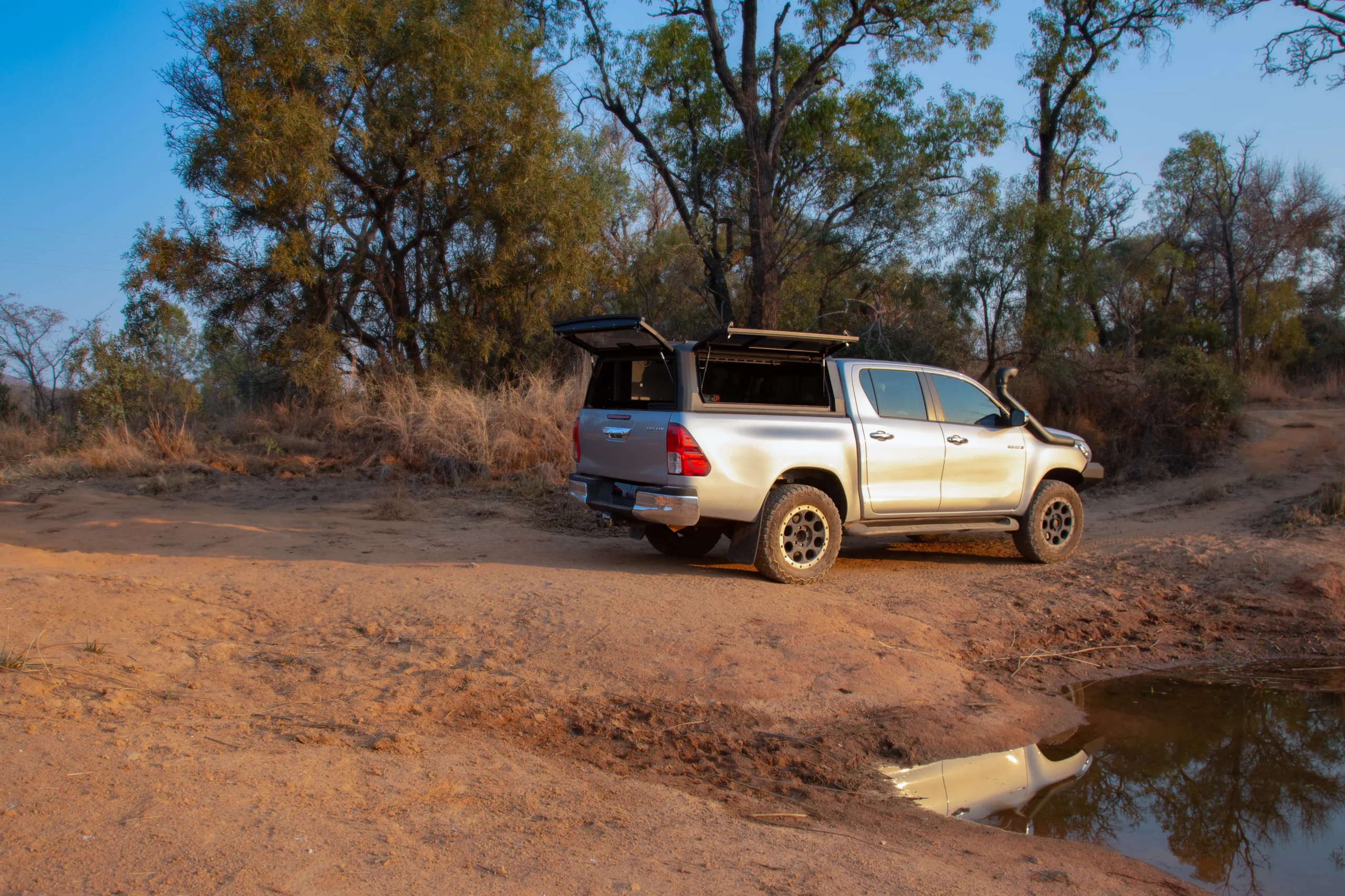
Aluminium vs Steel Bakkie Canopies
One of the first decisions when buying a bakkie canopy is whether to choose aluminium or steel. It’s also one of the most misunderstood choices.
Both materials have strengths. The key is understanding where each performs best, and where compromises appear over time.
1) Corrosion resistance is a major differentiator
Steel rusts when iron reacts with oxygen and moisture. Aluminium does not rust in the same way, instead forming an oxide layer that helps protect the surface.
In coastal or high-humidity environments, aluminium canopies typically require less long-term corrosion management than steel.
That is one reason aluminium is commonly used for modern premium canopies.
2) Weight impacts handling and payload
Steel is heavier than aluminium for the same structural strength. That extra weight reduces payload capacity and can affect handling when fully loaded.
Rhinoman’s aluminium canopies are designed to balance strength and weight, which is particularly useful for vehicles already carrying drawers, fridges, or rooftop equipment.
3) Structural strength depends on design, not just material
A common assumption is that steel is always stronger. In reality, strength depends on design, thickness, and reinforcement.
Automotive-grade aluminium can be engineered to deliver excellent rigidity while remaining lighter than steel. Rhinoman uses aluminium construction paired with reinforced frames and roof rails.
4) Load carrying and roof racks
Both steel and aluminium canopies can carry roof loads, but how they do so matters.
Rhinoman lists roof rails and compatible canopy roof racks designed specifically for their aluminium canopies.
Always match racks to the canopy design, rather than assuming universal compatibility.
5) Maintenance over time
Steel canopies often rely heavily on coatings to prevent corrosion. Chips and scratches can expose bare metal.
Aluminium requires less corrosion-focused maintenance, but still benefits from regular inspection and cleaning, particularly where dissimilar metals meet.
6) Fit, finish, and everyday usability
Aluminium canopies often allow more refined finishes, tighter tolerances, and smoother operation of doors and seals.
Rhinoman’s canopies include features such as dust proof locks, bonded glass, and integrated vents, which contribute to long-term usability.
7) Cost vs value
Steel canopies may appear cheaper upfront. Aluminium canopies often cost more initially, but may offer better long-term value through lower maintenance and better resale appeal.
8) Which material suits you best?
Choose aluminium if:
- you travel often or live near the coast
- weight and payload matter
- you want lower long-term corrosion risk
Steel may suit you if:
- budget is the primary constraint
- the canopy will see limited exposure to moisture
- weight is not a concern
Still deciding between aluminium and steel? Explore Rhinoman’s aluminium canopy range and speak to specialists who understand real-world bakkie use.
https://rhinoman.co.za/canopies/
Subscribe to our Newsletter
Get updates and special deals.